
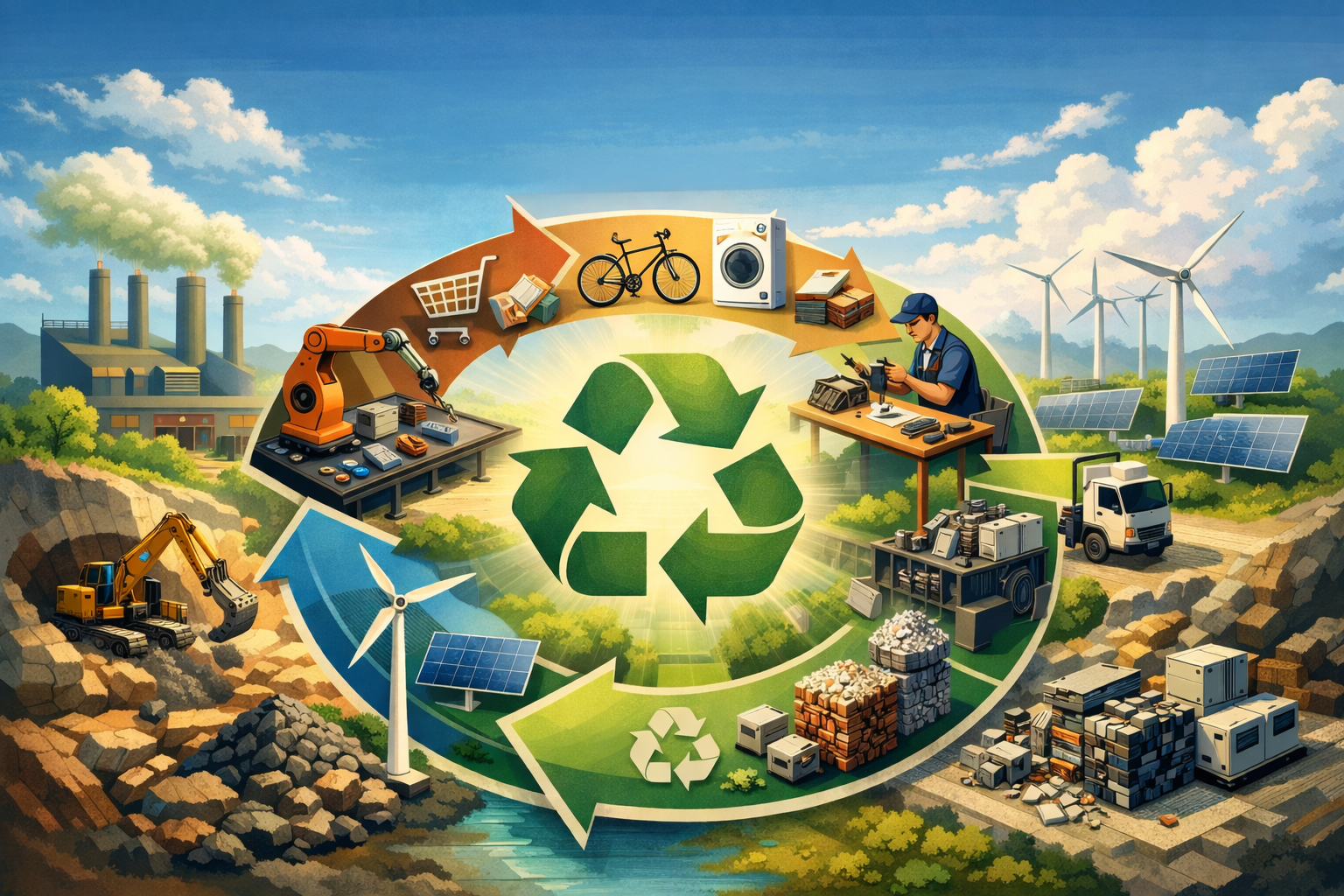
For decades, products were designed with one primary goal: performance at the lowest cost. Today, this mindset is rapidly evolving. Companies are no longer evaluated only by what they produce, but by the total lifecycle impact of their products — from raw materials to end-of-life recovery. This shift marks the rise of circular engineering.
Why Lifecycle Thinking Matters
Regulations such as Ecodesign requirements, Digital Product Passports, and new packaging rules are pushing companies to integrate sustainability directly into product development. At the same time, volatile raw material prices, supply chain risks, and rising energy costs are forcing businesses to use resources more efficiently.
Market expectations are also changing. Customers, investors, and partners increasingly demand transparency, measurable ESG performance, and products with lower environmental impact. Lifecycle thinking is no longer optional — it is becoming a competitive necessity.
What Circular Engineering Involves
Circular engineering embeds sustainability into the core of product design.
- Design for durability extends product lifetime and reduces material demand.
- Design for disassembly enables repair, refurbishment, and recycling.
- Material optimization reduces complexity and improves recyclability.
- Lifecycle data integration supports traceability and future compliance.
Together, these principles reduce environmental impact while improving long-term product value.
From Sustainability Goal to Measurable Performance
Circular engineering makes sustainability measurable. Lifecycle Assessment (LCA) helps identify environmental hotspots and guides smarter engineering decisions. Reducing material use lowers upstream emissions, while longer product life spreads environmental impact over time.
Digital Product Passports will further improve transparency by providing structured lifecycle data across the value chain — from suppliers to recyclers.
Business Value of Circular Engineering
Far from being just a compliance exercise, circular engineering can create real business advantages:
- Lower material and waste costs
- Longer product life and stronger customer value
- New revenue through repair, refurbishment, and service models
- Reduced regulatory and supply chain risks
- Greater operational and resource resilience
Companies that integrate lifecycle thinking early are better positioned for future market and regulatory changes.
Conclusion — Engineering the Future with Circularity
Circularity is becoming a core principle of modern engineering. By shifting from product-focused design to lifecycle thinking, companies can reduce waste, use resources more efficiently, and create longer-lasting value. Integrating durability, material efficiency, and lifecycle transparency not only lowers environmental impact but also strengthens competitiveness and resilience. In the emerging industrial landscape, circularity is no longer optional — it is the foundation of future-ready business.
“The future will be circular, or it will not be at all.”
Frans Timmermans (European Green Deal)
#ESG #Sustainability #CircularEconomy #Decarbonization #NetZero #ClimateAction #SustainableBusiness #CorporateSustainability #ESGStrategy #GreenTransformation #SustainableGrowth #BusinessStrategy #ValueCreation #ResilientBusiness #FutureOfBusiness #CSRD #CircularDesign #LifecycleThinking #ResourceEfficiency #SustainableIndustry
